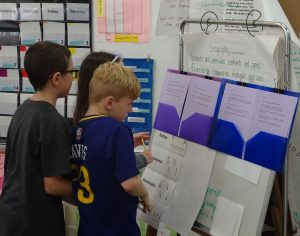
 Our week has been filled with reading, writing, science and social studies. The children are beginning to create their display boards for our geography museum. We’ve begun a unit on magnetism so we’ve been having lots of fun with magnets too. They are cool.
Growing Our Informational Writing Powers
Most of the children have completed their research and have determined what they consider to be seven Wonders in their countries. They have read and taken notes and are now trying to organize those ideas into paragraphs. The expectation is that they share a minimum of six facts about each wonder and that they attempt to expand their writing using description and detail.
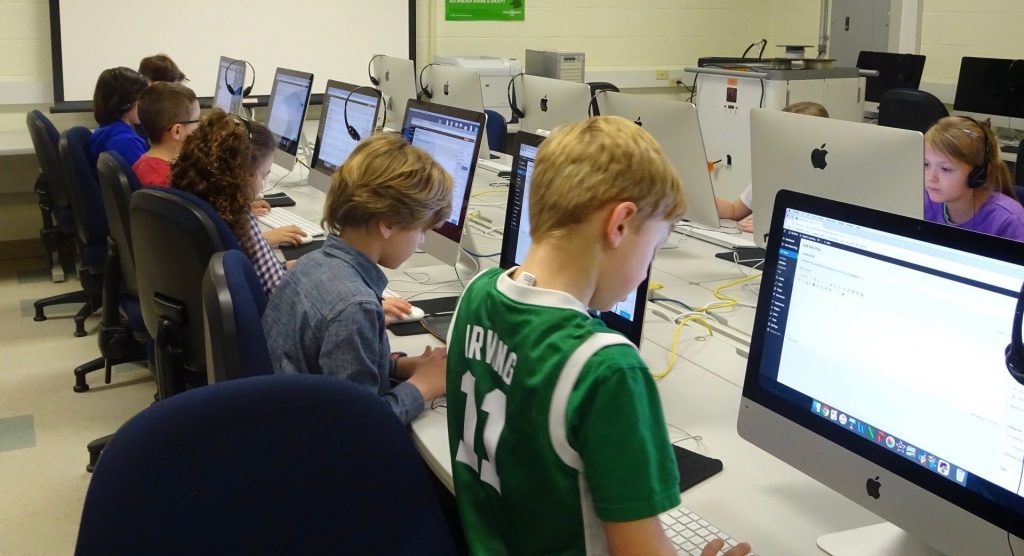
 That is a tall order. Some of the children are not yet able to consider that their readers may not have seen the pictures they have. They cannot imagine their readers many not know what they know. Other writers have moved to a stance that “longer is better.” To make their writing longer however, they have shifted to having two screens open at a time so they can mimic the organization of online articles. You’ll be able to spot the rather stiff, adult-like construction in around the sentence gems that truly share what that child found wondrous about the topic. And finally, there are others who are able to consider a more general outside audience. They have read widely, taken time to record notes and have considered several ways to present the information before deciding to draft.
 There is much to learn and master as writers. It takes time. All three of the above descriptions are typical in classrooms from third to fifth grade. When you combine learning to write well, with understanding content you can well imagine the how challenging it is to present the Wonders of a country. They are excited to try and are looking forward to our Country Convention on Thursday, March 15.
Investigating Magnetic Force
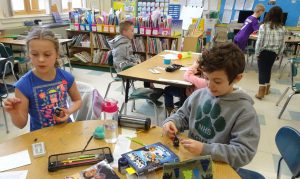
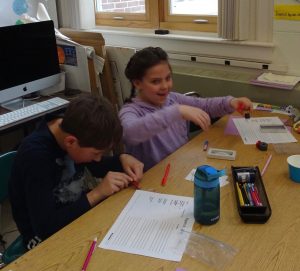
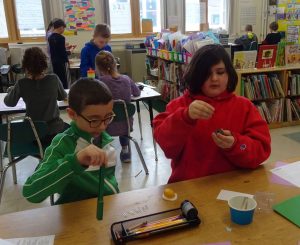
We’ve been having fun with magnets. We’re learning about their properties. How they pull – attract, and push – repel. We’ve also learned how magnetic force can travel across a distance and is useful in making many things run more smoothly. We can read about that and see pictures of that happening. In our classroom, they are really fun to experiment with. We can make items float and fly as if they can defy gravity.
Learning About Fractions
 We’ve begun learning about fractions. We know that at fraction is a part of something and that it must be a fair share. We are learning the terms, numerator, denominator and equivalence. At this point we are learning to label fraction and to see then as part of a whole, sets within a larger group (division) or a part of a number line (linear measure.)
Bits and Pieces –
- We finished Tiger Boy and learned a lot about life in the Sundarbans of India. What an interesting story about a very different part of the world. Talk to your child about what they think it might be like to live there and how his or her life would be different. In the story neither of Neel’s parents can read and his older sister has left school at 15 to care for her ailing mother. It is challenging to realize that Neel’s life is not uncommon at all.
 We’ve been exploring how writers use a variety of sentence types and kinds. We already knew about statements, questions and exclamations, but now we’re exploring simple, compound and complex sentence structures. We’ve been exploring parts of speech as well. A new one for everyone was conjunction. Ask your child if s/he remembers that job and see if s/he can remember the five criteria we decided all sentences must have.
- We’ve continued to explore revision with short personal narratives. We’ve also begun learning about and reading various fables. We’ll eventually use this genre as a model for writing our own original fables. We’ll publish both types of narratives in a classroom magazine.
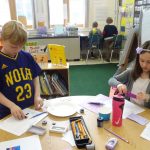
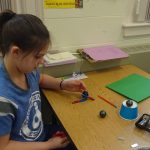 As we are reaching the end of our Global Geography project, we’ve continued thinking of ways we can change the world for the better. We have a collection of poems about kindness and peace that we read together each day. We are creating a Peace Gallery for you to enjoy when you come to our Country Convention. Our images show what we think of when we think of peace. Here’s something we hope will make you smile:
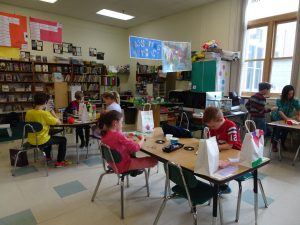
 We’ve had a week of celebrations – the 100th day of School, Valentines Day and the completion of The Global Kind Project – and projects. We shared kindness with three classes this week and made our Valentines bags. That on top of reading books by Trudy Ludwig and Patricia Polacco, exploring ideas of peace, writing, researching, reading and solving problems each day. It’s been a full week.
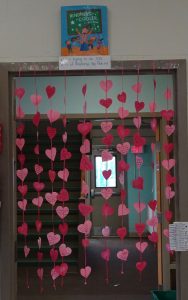 We’ve completed the Global Kind Project and achieved our goals. We reached 100 acts of kindness in a month’s time. We probably performed more than that, but, recognized and recorded that many. We also achieved our second goal. We recognized every student in the school by making something just for them. That felt great!
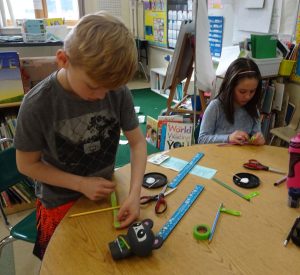 The month long celebration is over, but we ‘d like to continue to find ways to pay it forward and make people smile. We explored the ideas of kindness, empathy, gratitude, and peace. We’re learning to remain present and appreciate the wonders around us.
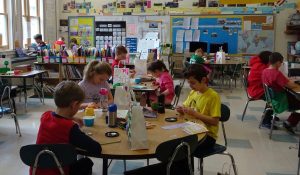 We’ve been exploring Peace – what it means to us, and how it shows in the world. We’ve been thinking about how “peace” looks and sounds, feels and smells. We’ve read a number of books and poems about peace and that inspired us to create our own images of peace and to learn how the word peace is said and written in each of our countries. We’ll soon have those images out in the hall for all to see.
 Thanks to everyone for helping us celebrate friendship on Valentines Day. It felt good to take some time stop and realize that we enjoy being together. We like working together to do things and we like learning together as well.
 We are looking forward to sharing our work with families on
  We’ve also explored the concepts of perimeter and area. While some of the children rely on counting, most of them realize that perimeter is the outside and is found by adding, while area is the inside and is found my multiplying.
 Talk to your child about our current chapter read-aloud, Tiger Boy, and what s/he is beginning to realize about living in a place where money and resources of scarce.
 We could use your help in reminding your child how you hope they act at school. There is not a day that goes by that I am not talked over during instruction. There is rarely a group meeting or lesson not interrupted by chatting. While we are doing a lot, the class continues to consume a huge amount of time talking. I fear many of the children will not meet work expectations. Some will not meet them because they are unfocused. Some will not meet them because they have chat throughout instruction and are unaware of the expectation. They totally miss the lesson. Projects, play dates, video games or squishies are more important to them than learning. Chatting during instruction is a chronic problem for over a third of the class. Their chatting is negatively impact by reducing their time to practice and learn. Thank you for your help with this.
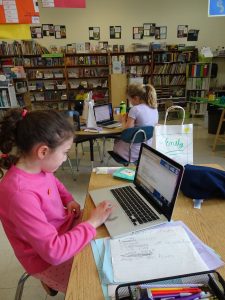
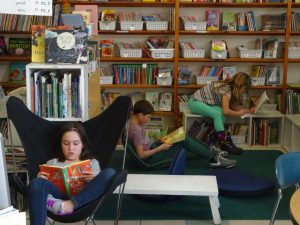 There have been so many stops and starts recently, it is challenging to feel as though we’re accomplishing very much. Our progress has been slowed, but we are moving forward so that is something to celebrate.
 We’ve also continued reading about different parts of the world. We completed Sadako and the Thousand Paper Cranes, our first chapter book about a different time and place in the world. We have begun Tiger Boy, our second chapter read aloud set in a different country. This is a bit more challenging. It is set in the Sundarbans, the largest mangrove forest in the world and we have very little background knowledge (schema) to help us visualize the setting. We are going to begin some sketch-noting as we read. Clearly this is a different place and culture.
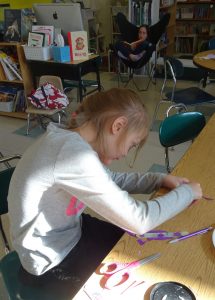 We’ve shared many picture books about different places in the world too: Four Feet, Two Sandals, Listen to the Wind, It Could Always Be Worse, Lost and Found Cat, Dear Primo and My Beautiful Birds. Many of you would be smiling if you could hear our discussions. They are full of questions and wonderings. They are full of indignation and empathy. They are beginning to recognize how different people are across the globe. Our next steps will be to learn what readers, thinkers and learners do when they recognize they are not fully able to visualize.
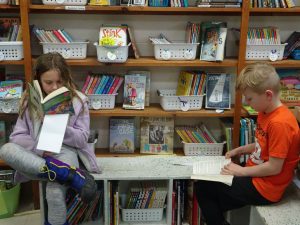 We’ve been learning about synonyms and the power of unusual words. We’ve been reading short magazine articles and looking at how they are written. Whole collections of words meaning “brave” or “gross” have been used by the author so they don’t have to write the same word over and over again. This makes the writing more interesting. It also seems to help it flow more smoothly for the reader.
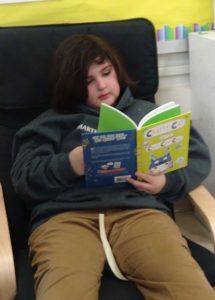 As you look through your child’s work this week you’ll see how your child is using and learning to use the standard algorithm with addition and subtraction. The problems we’ve been solving have used large amounts associated with the countries the children are researching. Subtracting and subtracting with zeroes remains a challenge, as is expected. The larger amounts help the children visualize the process of trading thousands for hundreds, hundreds for tens and tens for ones.
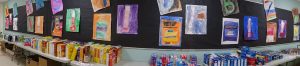 Thank you for all the cereal donations. Our class collected 34 boxes to contribute to the total. It is really exciting to see the entire collection as we walk down the hall. It is a fabulous project to be a part of.
 Our Global Geography
 Week 1:
 Happy Ground Hog’s Day! I don’t think there will be a shadow, unless there’s some rapid clearing … and so, six weeks until spring. We can do that! This week as I read through book club work, responses to reading, blog posts, daily writing projects and math problems, I was struck by thinking that is happening in our classroom. Your children are puzzling through a lot. On top of that, I’m noticing that more children are willing to stop and put effort into an assignment, rather than jot one or two quick partial sentences to be done. That’s refreshing. They are beginning to notice the rewards of thoughtful time and effort.
 This week we’ve been taking note of and appreciating the many opportunities we have. We are trying to understand how different life is around the world. We have explored books that share the stories of refugee children, currently and from the past. It is hard for us to fully imagine, but their stories have helped us become more aware of how we might use our voices to promote action to make the world an even better place.
 We’ve set a date for our next class museum. In it we will share the information we are discovering about the Wonders of our countries. It will be Thursday, March 15. Many of the children are concerned that this is not a good choice for them because they have other commitments. Thursday was the most chosen day of the week. We hope that by knowing in advance, families may be able to make arrangements to attend. Sadly, though, we do understand if it is not possible for some to present their work in the evening. The museum will be open in the afternoon from 2:15 to 2:45 and later again in the evening from 5:30 to 6:30. Further details will be shared as the children make their plans.
 During this round to book clubs, it became apparent that we needed to spend more time thinking about what we are reading. We needed to learn how to stop and consider the choices the author was making and to notice how event connects and builds the story or information. We are trying to uncover the main idea of each chapter or section to figure out how each part contributes to the authors’ message.
 As a class we’ve spent the week exploring an article called, “The Killer Smog” by Lauren Tarshis. It is an event that happened in London in 1952 that seemed to spur the environmental action like the Clean Air act in the 1970. Talk to your child about what they learned about it. You may want to help them understand why we burn coal and more about manufacturing. They are just beginning to be able to understand that each choice and action has a consequence and reaction. It’s complicated.
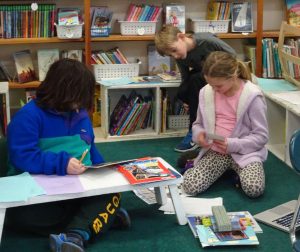 You may have noticed that we’ll be doing another math fact check next week that will include all four operations. Our goal is to improve scores by at least 5 problems – 10 would be terrific. Thank you so much for your support with this goal. There is not enough time in our day to make sure that the kids the play games often enough to give them the opportunity to internalize the facts. Worksheets are quickly done and offer little reward. The games sent home like Tiguous, Circles and Stars, Multiplication Top-it or games you might have like Farkle or Yahtzee offer lots of practice opportunities. Thank you for your help with this!
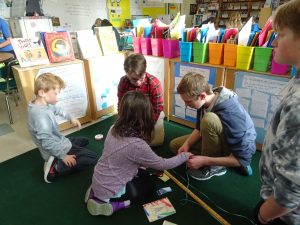 Thank you to the group of 8th graders who were able to come into the classroom to help us create our learning journals. We are so grateful for their help. We couldn’t have done it without their time and help.
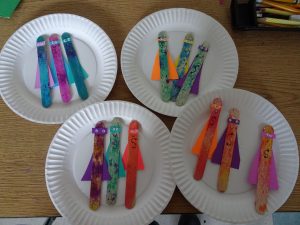
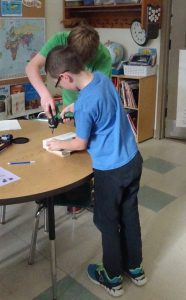 We’ve continued to share smiles (we hope) and fun throughout the school through our participation in the Global Kind Project. We left cupcake pencils at the office, created monster pencils for 3rd grade and name pencils for the Preschool. It feels good to make others happy.